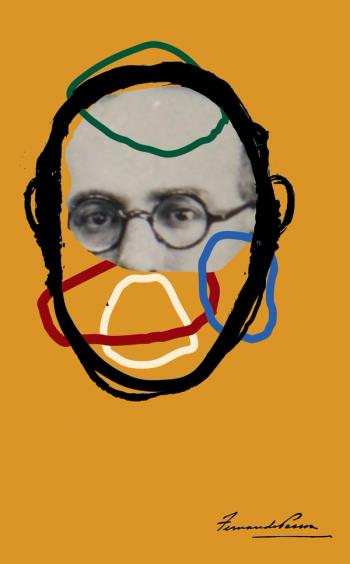
Fernando Pessoa
Fernando Pessoa (1888–1935), the Portuguese poet, fiction writer, literary critic, and translator, is one of the most significant literary figures of the twentieth century. After nearly a decade in Durban, South Africa (1895–1905), he returned to his native Lisbon at the age of seventeen and went on to create one of the most extraordinarily varied bodies of work in modern literature. By the time of his death, at forty-seven, Pessoa had invented nearly 140 fictional alter egos—or heteronyms, as he called them—under whose names he wrote poetry and prose, including Karl P. Effield, Charles Robert Anon, Alexander Search, Jean Seul de Méluret, Vicente Guedes, Frederick Wyatt, and Bernardo Soares, among many others. Alberto Caeiro stands at the center of Pessoa’s poetic constellation; the other major heteronyms, Ricardo Reis and Álvaro de Campos, as well as Pessoa himself, regarded Caeiro as their literary master. Outside Portugal, Pessoa is best known for The Book of Disquiet (Livro do Desassossego), an unfinished masterwork assembled and published posthumously. A commercial correspondent by profession and a director and contributor to several Portuguese literary magazines, Pessoa left behind a vast, multilingual oeuvre in Portuguese, English, and French that continues to be edited, translated, and studied far beyond the Iberian Peninsula. He wrote his last line in English, the language of his formative years, one day before his death in November 1935: “I know not what tomorrow will bring.”