Helle Helle

Mikkel Carl

Helle Helle

Helle Helle (b. 1965) is one of Denmark’s foremost and best-loved novelists. She has been nominated four times for the Nordic Council Literature Prize. Her highly acclaimed novel This Should Be Written in the Present Tense was praised by John Self in The Guardian for being “a book with all the bigness hidden away . . . so quiet you can almost hear yourself swallow.”

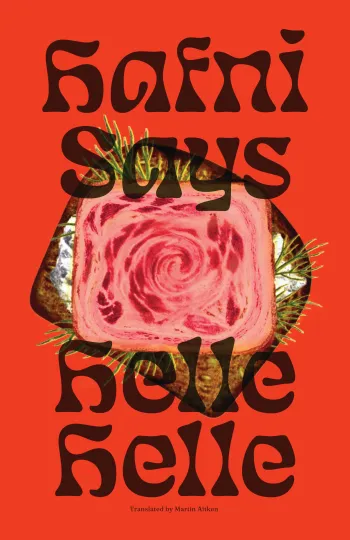
cover of the book Hafni Says

Hafni Says

Fiction by Helle Helle

Translated from Danish by Martin Aitken

Hafni says: I don’t want to be me. I want to change who I am. I don’t know how to change who I am.

Hafni has come to the end of her marriage. From a rest stop she phones the novel’s narrator—a main character from Helle Helle’s previous novel they—but it’s she who does all the talking. She’s been celebrating impending divorce with a “smørrebrød tour” of the southern Danish countryside, where she samples Danish classics, chiefly open-faced sandwiches and afternoon tea. A trip that was meant to take a week digresses once, then twice, until it ends up taking Hafni an entire month. As told in tightly controlled, splintered mini chapters, the book incarnates how Hafni herself digresses, and dwells. She seems to view her past as one long series of accidents and mistakes, the accumulation of which somehow became the life she was living, a life that she now longs to cast off so she can start anew. Nominated for the Nordic Council Literature Prize, Hafni Says is brought into English in a magnificent translation by Martin Aitken.

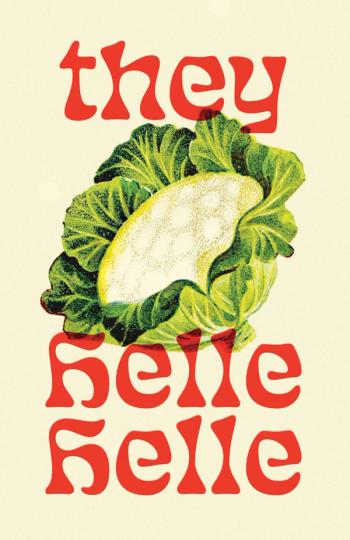
cover of the book they

they

Fiction by Helle Helle

Translated from Danish by Martin Aitken

Following a number of moves from one shabby rental to another, they—the mother and daughter of this elusive, strangely riveting novel set in 1980s Denmark—now reside in an apartment over the hairdresser shop in the same island town where they’ve always lived. It's only the two of them, and they are so enmeshed that it can be hard to tell them apart: they share the same manners, habits, and opinions to an almost comic degree. One day the mother feels a lump below her chest, and as our young heroine reflects, “nothing’s the way it is.” While the mother is in and out of the hospital, the daughter—barely sixteen and just starting high school—makes new friends (Tove Dunk, Hafni, Bob, and Desert Boots) and meets a few boys, but she remains essentially alone. In its splintering, multi-layered, perpetual present tense, where the borders of time seemingly expand, flatten, and dissolve, Helle finds an unexpectedly moving voice for her heroines’ pain, one which rises almost wordlessly to then reach across and profoundly touch the reader. A poignant coming-of-age story and a comedy of errors, they is also a billet-doux to the fashions and fads of the island of Lolland, Helle’s childhood home: she painstakingly records what people wore, how they spoke, and the kinds of things they ate (“cauliflower gratin” and “macaroni horns in the tomato soup”). Gorgeously rendered into English by the prize-winning translator Martin Aitken, they is an exquisite small-town portrait—oblique, calibrated, and oddly affecting—of the love between a mother and daughter, of all its attendant longing, and the inevitable letting go.

Buy the paperback for $16.95

One of my favorite Danish writers—she's the master.

Olga Ravn, The Guardian

Helle Helle has enchanting gifts as a storyteller. The words are so light they nearly float off the page.

The New York Times
Scroll to Top of Page