[Qian Zhonshu’s writing] can be read on its own merits within the most demanding of global contexts.

Jonathan Spence

Qian Zhongshu

The fiction writer, essayist, editor, and poet Qian Zhongshu (1910–1998) was one of China’s foremost “scholar-novelists.” With a mastery of Chinese, English, Greek, Latin, German, French, Spanish, and Italian, Qian is seen by many as the last link in an unbroken chain of geniuses stretching back to Confucius. In 1935, he passed his examinations with the highest score in history. He wrote landmark texts on classical Chinese literature as well as short stories, poems, essays, and a second unfinished novel, Heart of the Artichoke, which was lost in the wartime mail.
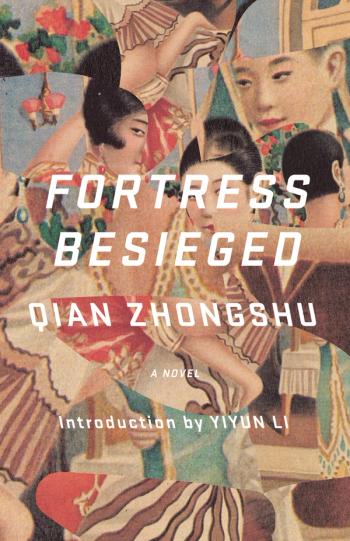

cover of the book Fortress Besieged

Fortress Besieged

by Qian Zhongshu

Translated by Jeanne Kelly and Nathan K. Mao

With a contribution by Yiyun Li

Set on the eve of the Sino-Japanese war, Fortress Besieged recounts the exuberant misadventures of its hapless hero Fang Hung-chien. After aimlessly studying in Europe at his family’s expense, Fang returns to Shanghai armed with a bogus degree from a fake university. On the ocean liner back, Fang’s life becomes deeply entangled with those of two Chinese beauties—Miss Su and Miss Pao. Qian writes, “With Miss Pao it wasn’t a matter of heart or soul. She hadn’t any change of heart, since she didn’t have a heart.” When he does finally make it home, he obtains a teaching post at a newly established university, encounters effete pseudo-intellectuals, and falls into a disastrous marriage of Nabokovian heights of distress and absurdity. A glorious tale of calamity, disillusionment, love, war, and wedded unbliss, Fortress Besieged was acclaimed by C. T. Hsia as “the most delightful and carefully wrought novel in modern Chinese literature.”

cover of the book Fortress Besieged

Fortress Besieged

First published in China in 1947, Fortress Besieged is arguably the greatest Chinese novel of the twentieth century. Set on the eve of the Sino-Japanese War, our hapless hero Fang Hung-chien, with no particular goal in life and with a bogus degree from a fake university in hand, returns home to Shanghai. On the French liner back, he meets two Chinese beauties, Miss Su and Miss Pao. Qian writes, “With Miss Pao it wasn’t a matter of heart or soul. She hadn’t any change of heart, since she didn’t have a heart.” Fang eventually obtains a teaching post at a newly established university in the interior where the effete pseudo-intellectuals he encounters in academia become the butt of Qian’s merciless satire. Soon Fang falls into a marriage of Nabokovian proportions of distress and absurdity. A magnificent litany of misadventures, Fortress Besieged draws from traditions of both China and the West to create its own unique feast of delights. The renowned scholar of Chinese history, Jonathan Spence, provides a new foreword to this exquisite translation.

[Qian Zhonshu’s writing] can be read on its own merits within the most demanding of global contexts.

Jonathan Spence
Scroll to Top of Page