Ilse Aichinger

Ilse Aichinger

Ilse Aichinger

Ilse Aichinger (1921–2016) was born in Linz, Austria. Her mother was a Jewish doctor and her father a Christian teacher. Aichinger and her twin sister were persecuted during the Second World War: Aichinger was forced into manual labor in a button factory while her sister escaped on the Kindertransport. Aichinger hid their mother in her room at the Hotel Metropol—also used as the Gestapo Headquarters in Vienna—for the duration of the war. All three women survived; their other family members perished. Aichinger studied medicine in Vienna, but she abandoned her studies to become a writer. She wrote poetry, radio plays, film criticism, short stories, and one novel. Aichinger won numerous awards including the Nelly Sachs Prize; she rejected the Order of Merit of the Federal Republic of Germany.
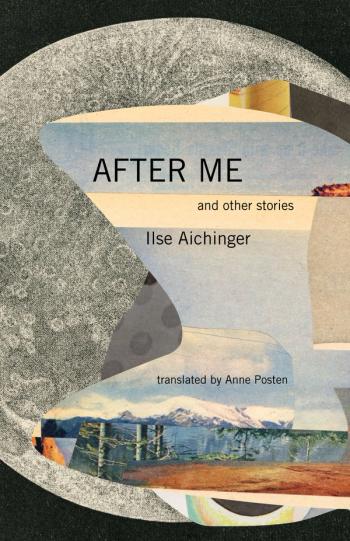


cover of the book After Me

After Me

Fiction by Ilse Aichinger

Translated from German by Anne Posten

When someone pushes the bed out of the hall, when you see that the sky is turning green, and if you want to spare the vicar a funeral sermon, then it is time for you to get up, quietly, as children get up when the morning light starts to glint through the shutters, secretly, so the nurse doesn’t see—and quick!

Like the short fiction of Silvina Ocampo and Bruno Schulz, Aichinger’s chilling and surreal stories will haunt you long after reading. Her deft experiments with the language used and corrupted by the Nazis seem almost to bend time—reversing it and compressing it—so that possible future and past selves live among ghosts, the alienated, and the displaced. Like tricks of the eye, a crime seen from a distance, or an unlikely coincidence, Aichinger’s singular fiction—heavily influenced by cinema—questions the solidity of existence.

A member of the hugely influential Gruppe 47, which included Ingeborg Bachmann, Paul Celan, Uwe Johnson, and Günter Grass, Aichinger is one of the last of her peers to find world fame. Now available in Anne Posten’s deft translation, After Me collects the greatest of Aichinger’s short works.

Scroll to Top of Page