John Batki

John Batki
John Batki is a kilimologist, writer and translator who was born in Hungary and has lived in the United States since age fourteen.
John Batki is a kilimologist, writer and translator who was born in Hungary and has lived in the United States since age fourteen.
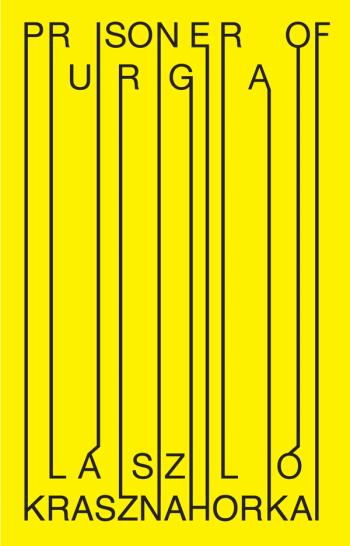
Translated from Hungarian by John Batki
In this book of journeys—to enlightenment? to a way out of a terrible life crisis? to the Celestial Empire? to a meeting with the gods?—a holy fool of a character named László Krasznahorkai travels for days and days across the Gobi Desert by train. Past vistas of empty vastness worthy of Kafka’s China, László enters into insoluble metaphysical thickets but finally gets beyond the Mongolian border and into Beijing. Always searching for contact with the divine, László struggles through terrifying traffic to holy sites and temples (as well as to an exclusive, horrifying restaurant). But only on László’s very last night in China, at a famous Beijing theater, does he encounter the divine—in a most unlikely guise. The remarkable Prisoner of Urga, long overdue in English, is an early masterwork from the world’s newest Nobelist—and a strange, chewy, and ever-surprising delight.
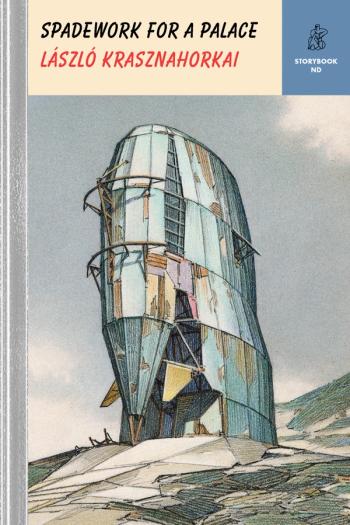
Translated from Hungarian by John Batki
WINNER OF THE 2025 NOBEL PRIZE
Spadework for a Palace bears the subtitle “Entering the Madness of Others” and offers an epigraph: “Reality is no obstacle.” Indeed. This high-octane obsessive rant vaults over all obstacles, fueled by the idées fixes of a “gray little librarian” with fallen arches whose name—mr herman melvill—is merely one of the coincidences binding him to his lodestar Herman Melville (“I too resided on East 26th Street . . . I, too, had worked for a while at the Customs Office”), which itself is just one aspect of his also being “constantly conscious of his connectedness” to Lebbeus Woods, to the rock that is Manhattan, to the “drunkard Lowry” and his Lunar Caustic, to Bartók. And with this consciousness of connection he is not only gaining true knowledge of Melville, but also tracing the paths to “a Serene Paradise of Knowledge.” Driven to save that Palace (a higher library he also serves), he loses his job and his wife leaves him, but “people must be told the truth: there is no dualism in existence.” And his dream will be “realized, for I am not giving up: I am merely a day-laborer, a spade-worker on this dream, a herman melvill, a librarian from the lending desk, currently an inmate at Bellevue, but at the same time—may I say this?—actually a Keeper of the Palace.”
Buy the hardcover for $17.95

Translated from Hungarian by John Batki
WINNER OF THE 2025 NOBEL PRIZE
In this chase thriller, a hunted being escapes certain death at breakneck speed—careening through Europe, heading blindly South. Faster and faster, escaping the assassins, our protagonist flies forward, blending into crowds, adjusting to terrains, hopping on and off ferries, always desperately trying to stay a step ahead: I’m a prisoner of the instant, an I rush into this instant, an instant that has no continuation, just as it has no earlier version, and I have to tell myself—if I had the time to think about this between two instants—that I have no need for either past or future because neither one exists. But in fact, I have no time between two instants. Since there’s no such thing as two instants.
László Krasznahorkai—celebrated for the exhilarating energy of his prose—outdoes himself in Chasing Homer. A classic escape nightmare, the book is sped on not only by that signature velocity, but also—reaching out of the story proper—by the wild percussive music of Szilveszter Miklós, scored for each chapter, and accessed by the reader via QR codes. And this unique collaboration also boasts beautiful and intense full-color paintings by Max Neumann.
Buy the paperback for $16.95

Translated from Hungarian by George Szirtes, Ottilie Mulzet and John Batki
WINNER OF THE 2025 NOBEL PRIZE
In The World Goes On, a narrator first speaks directly, then narrates a number of unforgettable stories, and then bids farewell (“here I would leave this earth and these stars, because I would take nothing with me”). As László Krasznahorkai himself explains: “Each text is about drawing our attention away from this world, speeding our body toward annihilation, and immersing ourselves in a current of thought or a narrative…” A Hungarian interpreter obsessed with waterfalls, at the edge of the abyss in his own mind, wanders the chaotic streets of Shanghai. A traveler, reeling from the sights and sounds of Varanasi, India, encounters a giant of a man on the banks of the Ganges ranting on the nature of a single drop of water. A child laborer in a Portuguese marble quarry wanders off from work one day into a surreal realm utterly alien from his daily toils. The World Goes On is another amazing masterpiece by the winner of the 2015 Man Booker International Prize. “The excitement of his writing,” Adam Thirlwell proclaimed in The New York Review of Books, “is that he has come up with his own original forms—there is nothing else like it in contemporary literature.”
Buy the hardcover for $27.95

Translated from Hungarian by George Szirtes and John Batki
WINNER OF THE 2025 NOBEL PRIZE
The Last Wolf (translated by George Szirtes) is Krasznahorkai in a maddening nutshell–it features a classic obsessed narrator, a man hired (by mistake) to write the true tale of the last wolf of Spain. This miserable experience (being mistaken for another, dragged about a cold foreign place, and appalled by a species’ end) is narrated— all in a single sentence—as a sad looping tale, a howl more or less, in a dreary Berlin bar to a patently bored bartender.
Herman (translated by John Batki), “a peerless virtuoso of trapping who guards the splendid mysteries of an ancient craft gradually sinking into permanent oblivion,” is asked to clear a forest’s last “noxious beasts.” He begins with great zeal, although in time he “suspects that maybe he was ‘on the wrong scent.’” Herman switches sides, deciding to track entirely new game…
Buy the paperback for $13.95